‘A Long Winter’ Review: Andrew Haigh Finds Love and Dread High in the Mountains
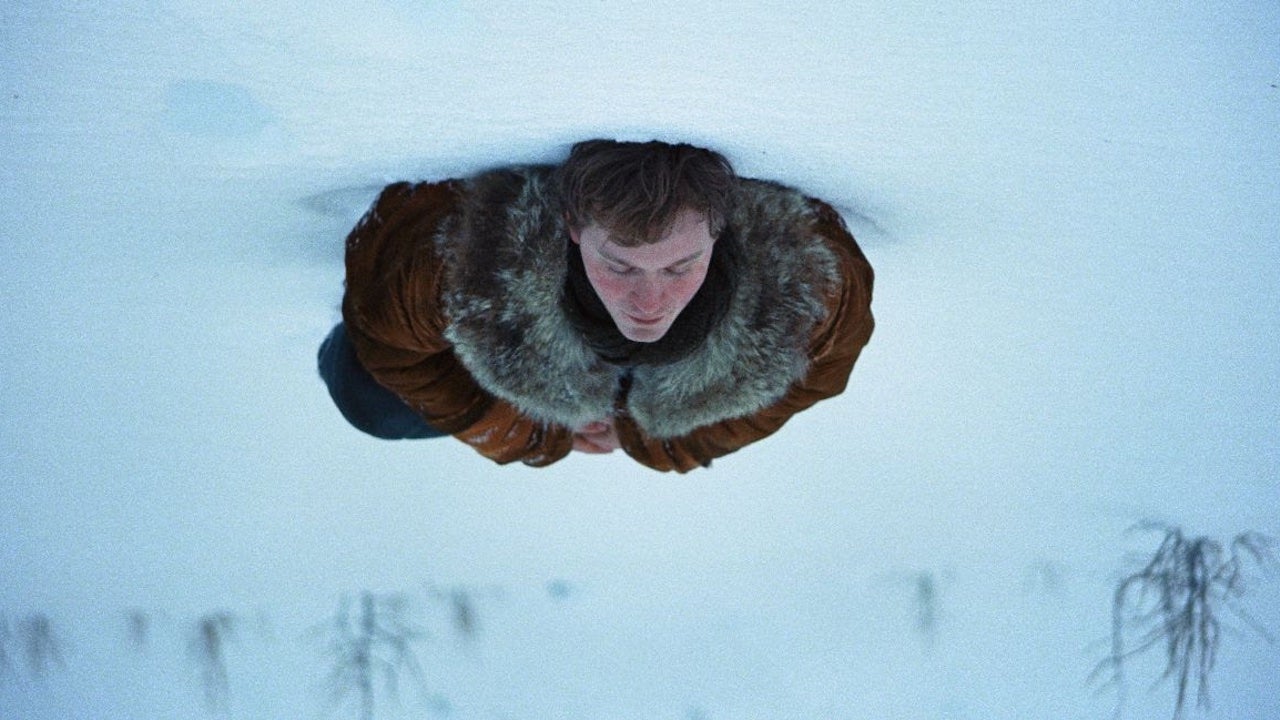
Andrew Haigh’s “A Long Winter” is a slippery film, and one with a lot on its mind. It’s a family drama, a gay coming-of-age story, a survival saga, a period tale, a meditation on grief. It contains elements found in previous films by the British writer-director Haigh (“Weekend,” “45 Years,” “All of Us Strangers”), but much of its sensibility comes from its source material, the 2006 novella by the Irish author Colm Tóibín (“Brooklyn”), albeit transplanted from the mountains of Catalonia in Spain to the higher reaches of the Rockies in Colorado. The film, which had its world premiere on Friday at the Telluride Film Festival, is quietly virtuosic, though perhaps not as immediately arresting as “All of Us Strangers” or “45 Years,” the films that have garnered the most awards attention for Haigh in the past. It’s also a film that subverts the beauty of its surroundings. “A Long Weekend” recasts the ritual of farm life in the mountains as something grim and foreboding; it takes one of the most gorgeous settings imaginable – the Canadian Rockies, standing in for Colorado – and makes it feel like a constant threat. It’s not quite “The Shining,” but there are similarities: The setting isn’t an escape, it’s a trap. It certainly feels that way to Louise (Caitriona Balfe), who lives in a mountain cabin with her husband, Lester (Ebon Moss-Bachrach), and their two sons, Mike (Fred Hechinger) and Tommy (Kit Connor). It’s the early 1950s, and the cabin where they raise chickens and rabbits is a 15-mile trek over mountain roads to the nearest town – a situation that pleases Lester but bothers Louise, who comes from a livelier part of these mountains and yearns to be closer to civilization. “It takes a certain type of person to live this close to heaven, I’ll tell you that,” one character tells Mike late in the film; it hardly needs to be spelled out that Lester is that type of person and Louise most assuredly is not. As the story begins, Mike is back from a year working on a farm in Iowa; his younger brother will soon be leaving to fight in Korea. Like their parents, the boys are a study in contrasts: Tommy can’t wait to get out of the mountains and experience a different world (“I don’t want to spend my life in this dump”), while Mike wants to stay put (“Some people want change, I know, but I like things the way they are”). They enjoy rhapsodic moments at home – not just the glories of the setting, but the more exuberant pleasures of dancing in the living room to Arthur Crudup’s “That’s All Right” years before Elvis hijacked the tune. But Andre Turpin’s moody camerawork and Paul Haslinger’s taut music, astringent and pinched on top and rumbling down below, is anything but bucolic; it suggests darker, grimmer turns to come. It doesn’t take long for those turns to arrive. On a trip to town for supplies, Mike spots his mother downing a shot in the back of a hardware store that she later claims was closed. It turns out that Louise’s shopping trips have another purpose: to buy the liquor that she consumes every day on the sly (though her alcoholism seems to be a “secret” known to everybody except Mike). The drinking gets worse until the day Mike finds his mother crying at the kitchen table, a broken glass in the sink and a mixture of sorrow and rage in her eyes. Lester finally explains to Mike what has been going on: His wife has had problems with the bottle for years, including a particularly bad stretch when the doctor said that the only way for her to survive would be to stop drinking altogether. So he’s thrown away her secret stash, sending her into hysterics that shake Mike, who can’t understand why they can’t just give her what she wants. But rather than curing her, the cold turkey treatment drives her away: Mike comes in the house after doing his chores and finds that his mother has left on foot on an early winter day when an impending storm will make it virtually impossible for her to cover the 15 miles to town safely. Her disappearance resets the film, but Haigh (and Tóibín before him) isn’t interested in a snowbound adventure story. “A Long Winter” develops that narrative while also slipping in and out of a dream state, exploring Mike’s growing awareness that he’s gay and testing the family bonds that kept them on the slopes of a mountain that might just be cursed. The different storylines jockey for space; at times it feels as if the film is trying to juggle too much, but Haigh proves adept at this tricky balancing act as the plotlines coalesce to serve a spooky and gently moving tale of loss, acceptance and the limitations of home. “That’s the thing about this world: Loving somebody’s not enough,” Lester says at one point. Still, “A Long Winter” suggests that Haigh’s own point of view is closer to a line from Mike: “Ma said, folk always find a way to cope.” “A Long Winter” will be released by Mubi. The post ‘A Long Winter’ Review: Andrew Haigh Finds Love and Dread High in the Mountains appeared first on TheWrap.
Take Your Experience to the Next Level
NewDownload our mobile app for a faster and better experience.
Comments
0U
Join the discussion
Sign in to leave a comment