America Strikes Back Against Foreign Censors With The Rulli GRANITE Act, HR 10174
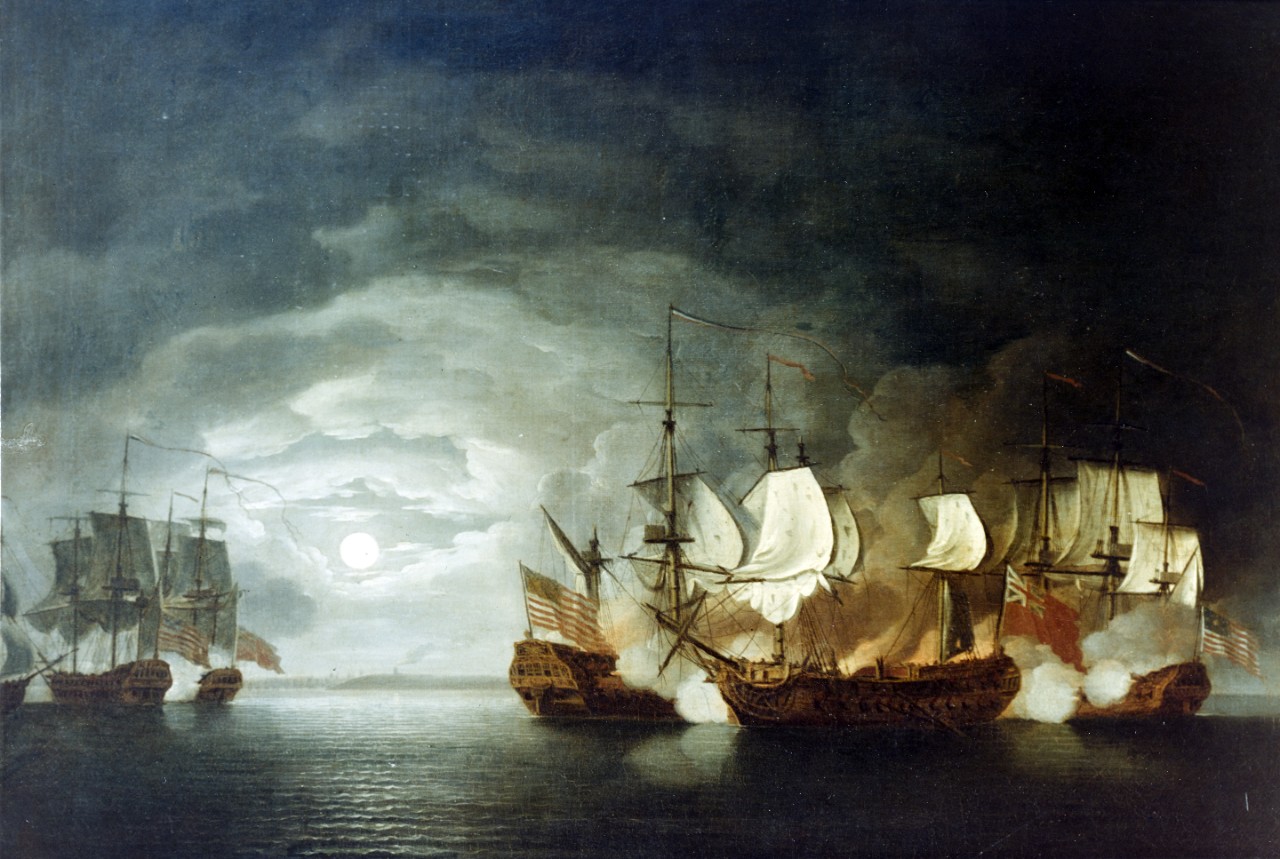
Bonhomme Richard vs. HMS Serapis, 1779 What is the GRANITE Act? The GRANITE Act is a bill to stop foreign governments from censoring Americans on the Internet. Per reporting in the Times, a federal GRANITE Act, the “Guaranteeing Rights Against Novel International Tyranny and Extortion Act,” was introduced in the House of Representatives by Congressman Michael Rulli of Ohio. Representative Rulli’s GRANITE Act is the first federal foreign censorship shield bill in American history. The bill text is available in full at congress.gov. How a “GRANITE Act” works A GRANITE Act amends U.S. law to make foreign censorship threats against Americans toothless. The threat alone, even a threat that would be very difficult to enforce, is enough to chill speech and restrict the American marketplace of ideas. Today, foreign governments threaten Americans for their online speech on a daily basis. Those threats must stop. All GRANITE bills have the following elements: The shield: they confirm, in statute, the existing judge-made position on non-enforcement of foreign censorship orders, demands, and judgments under First Amendment doctrine; The sword: if a federal bill, they create a private right of action, of some type, that can be brought against a foreign censor (this requirement is optional for state bills, as federal supremacy issues that crop up here have proven tricky in the past); and The definitions: they define “foreign censorship law” and the type of foreign censorship action which engages the shield and, where applicable, the sword in such a way as to address and deter the actual censorship modalities employed by foreign censorship agencies, which are frequently conducted by administrative fiat rather than by judicially-supervised due process. “GRANITE Act” describes not just Rep. Rulli’s bill, but also other legislative proposals incorporating GRANITE’s three elements I have been writing about GRANITE for ten months and often refer to the “GRANITE Act” in talks, articles, and other contexts. The term “GRANITE,” as most often used by Internet free speech types when discussing the possibility of a U.S. foreign censorship shield, does not usually refer to a specific bill. Most of the time, the term describes a bill which implements a particular blueprint for the use of American sovereign power to blunt the effectiveness of censorship orders sent into the United States. That blueprint is the three-element formula – shield, sword, and definitions – listed above. That blueprint was derived from a decade of experience, on the ground, representing clients, learning how foreign censors seek to project their power into our country. The GRANITE blueprint has been adapted and modified by different drafters in different ways. There are at least five different public draft versions of GRANITE in circulation today: The Wyoming GRANITE Act 2026, HB 70, the first-ever GRANITE bill, which I co-authored, a sword & shield state bill with extensive federal savings language, introduced in February 2026. It passed the Wyoming House of Representatives 46-12 later that month before stalling in the Senate in the short budget session; The Wyoming GRANITE Act (2027 reintroduction), a shield-only state bill currently in interim study anticipated to be introduced as a committee bill in early 2027; The West Virginia GRANITE Act, a sword & shield state bill, introduced in the West Virginia Senate mere days after Wyoming’s bill, in the short 2026 WV session but did not advance; The ALEC GRANITE Act, a model bill adopted by ALEC as a model national policy in July 2026; and The Rulli GRANITE Act, a federal sword & shield bill, the first federal GRANITE bill. This list will grow. A New Hampshire GRANITE Act following the ALEC model policy is to be filed in the first or second week of September 2026, with a view towards consideration in the 2027 general session. I am aware of multiple other GRANITE proposals still in the drafting stages, which I decline to identify at this juncture. Any bill satisfying GRANITE’s core criteria, as all of the above proposals do, including Representative Rulli’s proposal, would be correctly described as implementing the GRANITE blueprint. Any federal bill implementing the GRANITE blueprint would, if enacted, represent a dramatic improvement on the present U.S. legal position, where foreign censors avail themselves of the protections of the Foreign Sovereign Immunities Act whilst trampling on Americans’ free speech rights from afar. I support Rep. Rulli’s GRANITE Act without reservation. Speaking as a practitioner in the (pro bono) business of fighting foreign censors, this bill gives American lawyers the tools that we need to win. I would support any bill, state or federal, that satisfies the three elements of GRANITE. 1. The Brazen Foreign Censorship Attempt That Led to the Creation of the GRANITE Concept Readers of this blog will be familiar with the GRANITE concept, which had its origins right here after the UK’s global Internet censorship bureau, the Office of Communications or “Ofcom,” purported to fine my client, the U.S.-based imageboard 4chan, £20,000 for refusing to draft a “risk assessment” – read, a coerced confession – explaining how it, an American business, was guilty of violating UK censorship laws and failing to provide a plan to Ofcom as to how it planned to come into compliance. 4chan, in the lawful exercise of its First, Fourth, and Fifth Amendment rights, refused to comply and sued Ofcom instead in D.C. federal court. Six months later, Ofcom would purport to fine 4chan a further £520,000 for (a) refusing to dox its users, who have a First Amendment right to anonymous speech and (b) refusing to pay that initial fine. This purported fine of 4chan was the first time that the UK had ever used the enforcement provisions of its new Internet censorship law, the Online Safety Act 2023, to try to censor Americans. 4chan is by no means the only target: Ofcom has sent at least 197 such notices into the United States between February 2025 and April 2026, only a handful of which are publicly known. Most companies rolled over without a fight: by my count, exactly 4 demands, no more, no less, were publicly refused by Ofcom’s American targets. Ofcom’s demands are highly intimidating. I have seen several of these notices; each threatened Americans with ruinous fines, and possible prison terms, for non-compliance. This is not an exaggeration: see Ofcom’s correspondence to 4chan, in which the UK threatened exactly that, in writing. The letters were, as many of the letters I have seen from foreign censors are, labeled “CONFIDENTIAL” in shouty all-capital letters. In the lawful exercise of my client’s First Amendment rights, we published the letters anyway on October 16th, 2025. It appears that most American recipients of these orders, which if recognized in the United States would violate Americans’ First Amendment rights, quietly fold to this foreign pressure rather than seeking to assert their rights. The UK fined 4chan because the UK thinks that being American on the Internet should be illegal, and that an American exercising his constitutional rights to host content under American law, from an American webserver, in America is subject to the UK’s extraterritorial jurisdiction. In response to 4chan’s lawsuit, and in correspondence with my client, Ofcom took the position – in writing – that British censorship law overrides the First Amendment on American soil. Ofcom also asserted that American law on sovereign immunity, specifically the U.S. Foreign Sovereign Immunities Act, shielded Ofcom from being held accountable for its censorship of Americans in an American court. Put another way, Ofcom wants to have its cake and eat it. The UK’s official Internet censor wants to control American conduct on American soil, and it wants free rein to enforce British censorship law against American citizens, while also being completely unaccountable for its actions in American courts. That Ofcom, or any other foreign government, can make this argument and not immediately be laughed out of an American courtroom is due to a structural flaw in American law – a flaw only Congress can fix. 2. Sovereign Immunity: the Structural Problem with American Law Where Foreign Censorship is Concerned Ofcom can take this position due to an unfixed structural flaw in the American legal system, one which arises out of the fact that our sovereign immunity doctrines were designed for an analog world to prevent such absurdities as warships being seized by bailiffs when docked in foreign ports. Our sovereign immunity doctrines were not designed for the situation where a foreign regulator e-mails censorship demands into the United States by the hundreds, then claims the sovereign’s ancient dignities to immunize itself when the American targets of those demands seek redress before an American judge. The doctrine begins with The Exchange v. McFaddon, 11 U.S. 116 (1812), in which Chief Justice Marshall held that U.S. courts could not be used to seize a French warship docked in Philadelphia’s harbor while sheltering from bad weather in the North Atlantic: the “perfect equality and absolute independence of sovereigns” required judicial hands off. Rules like this made sense when sovereign power projected itself physically but lawfully into the United States, with the nation’s consent, by a hull in a harbor, or an ambassador in a capital city. Congress comprehensively modernized American sovereign immunity doctrine exactly once, in 1976, before the Internet existed, when the Foreign Sovereign Immunities Act, or FSIA, codified the so-called “restrictive theory” of sovereign immunity which holds that foreign sovereigns and their instrumentalities are, generally, not subject to the jurisdiction of the courts of the United States, subject to certain, narrow, exceptions. But the FSIA’s exceptions map onto the analog world of commerce, expropriated property, and torts committed entirely in the United States – put another way, the physical world. In many cases, sovereign coercion transmitted by wire fits none of these situations. In Doe v. Federal Democratic Republic of Ethiopia, 851 F.3d 7 (D.C. Cir. 2017), Ethiopia infected a Maryland man’s home computer with FinSpy spyware and recorded his family’s Skype calls; Ethiopia was held immune, because the tort was not committed “entirely” within the United States. In Broidy Capital Management v. Qatar, 982 F.3d 582 (9th Cir. 2020), Qatar hacked an American’s servers and leaked his e-mails to the press; Qatar, too, was found immune, for the same reasons. Under current doctrine, a foreign state that sells widgets to Americans or employs Americans can be sued. A foreign state that uses the Internet to surveil, hack, or threaten Americans with prison time to intimidate them in the free exercise of their constitutional rights, on the other hand, in each case targeting American citizens on American soil, retains, under our law, for its conduct, the dignified immunity of a foreign warship calmly undisturbed at anchor. It is time to modernize sovereign immunity doctrine once again. Our law in this area was made for the analog world of ports and paper contracts, not the world we live in now, a world of decentralized packet-switched networks and wires that carry a foreign censor’s threats directly into American living rooms and office suites. Reform is long overdue, to prevent foreign interference with American citizens, exercising American civil rights, on American soil, and online. For this reason, on October 18th, 2025, I published v0.1 of the GRANITE Act – a state-level shield bill designed for the State of New Hampshire that touched on all of these points, a practitioner’s wish-list of sorts for the tools that we need to stop foreign censorship cold at the American shoreline, in the hopes that this would serve as a roadmap for Congress to implement a federal fix. Others quickly followed with their own interpretations. Wyoming Deputy Secretary of State Colin Crossman, Wyoming State Representative Daniel Singh, and I subsequently developed an introduction-ready form of GRANITE, the Wyoming GRANITE Act. Wyoming GRANITE was introduced by Rep. Singh as HB 70 in January 2026 and passed the Wyoming House 46–12 on February 23rd, 2026 before falling short in the Senate during the short budget session. (Wyoming will attempt to pass GRANITE again, in shield-only form, in 2027.) Just last month, on July 24th, 2026, ALEC adopted the “shield” provisions of GRANITE as
Take Your Experience to the Next Level
NewDownload our mobile app for a faster and better experience.
Comments
0U
Join the discussion
Sign in to leave a comment