More than 600 people have flown into space since 1961, yet only 27 people were documented as having reached Challenger Deep by July 2022 — the deepest known point in Earth’s oceans, nearly seven miles below the surface.
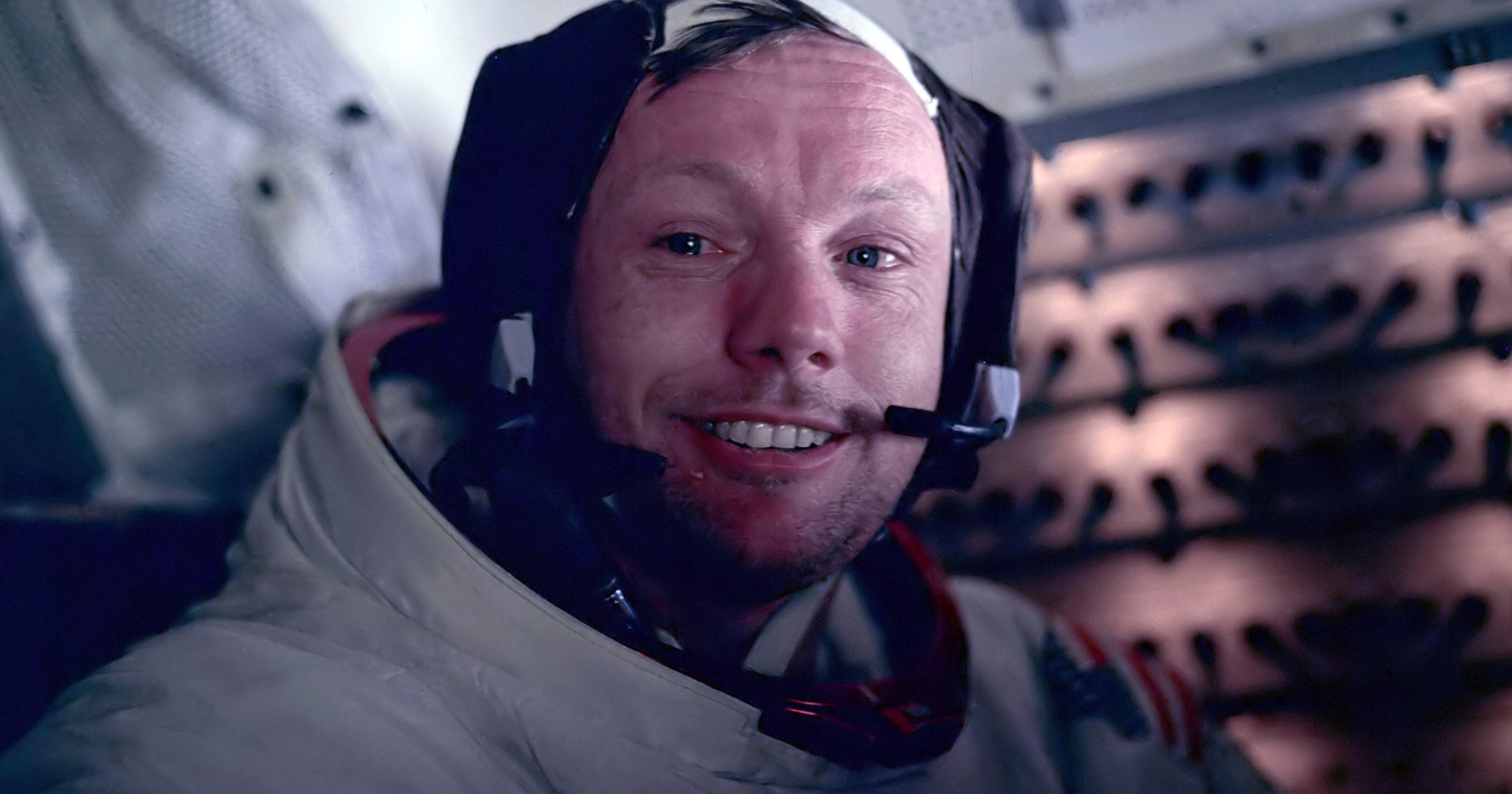
More people have seen Earth from space than have stood at the bottom of the ocean, by a factor of more than twenty. Human spaceflight began with Yuri Gagarin in 1961. By November 2021, ESA astronaut Matthias Maurer had become the 600th person to leave the planet, riding a SpaceX capsule to orbit. The tally has climbed higher since, pushed up by commercial flights. Now look down instead of up. As of the last dive in July 2022, only 27 people had been documented reaching Challenger Deep, the lowest known point on Earth. It sits at the southern end of the Mariana Trench in the western Pacific, roughly 6.83 miles down. That is nearly eleven kilometres of water pressing overhead. The ratio runs opposite to what most people would guess. Why down is arguably the harder trip Space is a vacuum. That is dangerous, but simple to design against: you just have to keep the air pressure in. The deep ocean does the reverse, and does it far more violently. At the floor of Challenger Deep the water bears down at 16,000 pounds per square inch, more than a thousand times the pressure at sea level. It is also permanently dark and just above freezing. A spacecraft window holds back nothing. A submersible hull has to hold back the weight of nearly seven miles of seawater trying to crush it flat. The person who has been down more than anyone describes it with a strange calm. Victor Vescovo said after one record dive: “I was surrounded by enormous pressure, but I was safely cocooned in my technological bubble.” Building that bubble is the engineering problem, and very few have solved it. How few have actually made it down For half a century, almost nobody went. Jacques Piccard and Don Walsh took the bathyscaphe Trieste to the bottom in 1960. Then decades passed. People would not return until filmmaker James Cameron’s solo dive in 2012. Three people in five decades. The numbers only moved when Vescovo’s submersible, the DSV Limiting Factor, began making repeat dives in 2019. He returned to the bottom a record 15 times between then and July 2022. Nearly every recent descent used that single vessel. The last of the documented dives carried oceanographer Dawn Wright, who reached the floor on 12 July 2022. Space, by contrast, has become a crowded route. There were over 2,800 launches in 2024 alone. Why we poured the money upward The imbalance is not really about difficulty. It is about motive, and the motive was politics. The Cold War turned space into a contest between two superpowers, and contests attract budgets. There was no equivalent race to the seafloor, no flag to plant at the bottom of the Mariana Trench, so the deep never got its Apollo program. When the deep finally did get sustained attention, the money came from a private wallet, not a government. Vescovo worked with an engineering firm to build the Limiting Factor, a two-person submersible that came at a reported cost of $30 million. Serious money, but a rounding error next to a national space budget. That difference in backing, more than any difference in physics, explains the lopsided head count. What the imbalance leaves unseen Perhaps the clearest measure of how little we have looked is not the head count but how much of the deep floor nobody has ever laid eyes on. A 2025 study in Science Advances tried to put a number on it, drawing on around 44,000 dive records from 120 countries since 1958. The finding: “More than 99.999% of the deep seafloor has never been seen.” The patch humans have actually observed up close works out to roughly the size of Rhode Island. Mapping the floor with sonar, rather than looking at it directly, has moved faster but still lags. NOAA reported that slightly more than 23% of the seafloor had been mapped in high resolution as of 2022. An international effort called Seabed 2030 is trying to chart the whole floor to modern standards by the end of the decade. Charting the shape of the seabed is a different, faster job than actually seeing it. Katy Croff Bell, who led the 2025 study, treats the thin record as a live problem. Bell argues that “As we face accelerated threats to the deep ocean—from climate change to potential mining and resource exploitation—this limited exploration of such a vast region becomes a critical problem for both science and policy.” You cannot manage what you have never looked at. What the two frontiers share, for now, is that most of the destination remains untouched. The post More than 600 people have flown into space since 1961, yet only 27 people were documented as having reached Challenger Deep by July 2022 — the deepest known point in Earth’s oceans, nearly seven miles below the surface. appeared first on Space Daily.
Take Your Experience to the Next Level
NewDownload our mobile app for a faster and better experience.
Comments
0U
Join the discussion
Sign in to leave a comment