University of Washington and Seattle biotech win $245M patent judgment against Guardant
Paragraph 1: The Long-Awaited Hammer Falls After years of legal maneuvering, tense courtroom battles, and a high-stakes clash between a nimble academic spin-off and a deep-pocketed industry titan, the gavel has finally come down. A federal judge has officially stamped a final judgment into the record, solidifying a massive financial victory for the University of Washington and its spin-off company, TwinStrand Biosciences, over the liquid biopsy giant Guardant Health. The ruling, handed down in the U.S. District Court for the District of Delaware, transforms a jury’s initial gut-check verdict into an unassailable legal fact. For TwinStrand and the university researchers who spent years perfecting a groundbreaking way to read DNA, this is the vindication they’ve been fighting for. For Guardant, it’s a $245 million reality check—and a looming threat that could fundamentally alter how the company operates its flagship cancer detection tests moving forward. The judgment isn’t just a matter of paying a fine; it is a formal declaration that Guardant built some of its most commercially critical products on a foundation that did not belong to them. Walking through the doors of that Delaware courthouse, both sides knew the stakes were astronomical, because at the heart of this dispute lies the very essence of modern cancer medicine: the ability to spot the most minuscule traces of a tumor hiding in a simple blood draw. Paragraph 2: Breaking Down the Mountain of Money Let’s talk numbers, because the figure attached to this judgment is as complex as the science behind it. While the headline number screams $245.7 million, that sum is actually a carefully constructed tower of different penalties and fees, each representing a distinct chapter of the infringement saga. The base of the tower is the original jury verdict from 2023, which found that Guardant’s willful infringement had caused $83.4 million in actual damages. But the story doesn’t stop there. The court recognized that Guardant didn’t just stop using the technology after the verdict—so they tacked on an additional $19.5 million in supplemental damages to cover the period after that first jury ruling. Then, there are the ongoing royalties: a hefty $119.4 million that accounts for the sales Guardant continued to make while the case was on the verge of conclusion. Finally, to make the point that delaying justice carries a price, the court added $22.9 million in pre-judgment interest. But here is the truly staggering part: the bill isn’t paid in full yet. The judgment includes a continuous, forward-looking mandate. Until the two patents expire in 2033, Guardant is now legally obligated to hand over 6 percent of the sales revenue from every covered cancer test it sells. Given that Guardant’s products generate hundreds of millions of dollars in annual revenue, that 6 percent royalty isn’t just a penalty—it’s a massive tax on their future operations. It fundamentally changes their profit margins, yet the court made it clear that access to this patented technology comes with a price tag that must be respected. Paragraph 3: How a Family Legacy Converged with Cutting-Edge Biotech To truly grasp why this fight was so bitter, you have to understand the sacred scientific territory they were fighting over. This isn’t about a generic software patent; it’s about a revolutionary method of reading human DNA that traces its roots back to the laboratories of the University of Washington. The technology, developed by a team including scientist Dr. Jesse Salk, is known as Duplex Sequencing. To the layperson, it solves a seemingly impossible problem: the current tools used to read DNA are prone to making their own errors, essentially creating “noise” that masks the very rare mutations that indicate cancer. Salk’s innovation acts like a high-powered microscope for genetics, correcting those errors by sequencing both strands of the DNA double helix. This cuts the false-positive rate by a staggering 10,000-fold, allowing doctors to spot mutations that would otherwise be lost in the static. It’s the difference between trying to hear a whisper at a rock concert and listening to that whisper in a soundproof room. And here’s where the story gets poetic: Jesse Salk isn’t just any biotech founder. He is the grandson of Jonas Salk, the legendary scientist who developed the polio vaccine. Carrying that gene for medical innovation, Jesse helped launch TwinStrand in 2015 to commercialize the UW breakthrough, backed by major investors including Madrona Venture Group and Alexandria Venture Investments. By 2021, they’d raised a massive $50 million Series B round to push the technology into the clinic, positioning themselves as a purist force in oncology, built on the foundation of a genetic legacy. Paragraph 4: The David’s Triumph Over a Goliath From the perspective of TwinStrand and the University of Washington, this final judgment is nothing short of a moral and intellectual triumph. Chad Waite, the chairman of TwinStrand’s board, expressed a quiet, satisfied confidence in the wake of the ruling. To him, this isn’t just about the money—it’s about the principle that intellectual property is sacred, especially in the world of medical innovation where cutting corners can have real-world consequences for patients. When Guardant Health launched its own competing tests that utilized similar error-correcting technology, TwinStrand argued that Guardant didn’t invent around the patents; they simply used them without a license. The jury agreed. Waite’s reaction, as captured in the company’s official statements, reflects a deep-seated belief that the facts of the case were always on their side. “We remained steadfast in our conviction that the facts would prevail,” Waite noted, hinting at the years of uncertainty and legal fees that a smaller company has to endure when taking on a billion-dollar rival. This victory sends a powerful message to the broader biotech community: shouldering the burden of basic research and development doesn’t just entitle you to a pat on the back; it entitles you to legal protection. For the researchers at the University of Washington, this isn’t just a windfall for the school’s endowment—it’s a validation that their taxpayer-funded, foundational research deserves to be compensated when industry giants turn it into consumer products, providing a vital revenue stream to fund the next generation of scientific breakthroughs. Paragraph 5: Guardant’s Unwavering Defiance and the Appeal However, if you think Guardant Health is going to roll over and write a massive check today, you would be dead wrong. The company, founded in 2012 and now a household name in oncology circles, is gearing up for a protracted war. Their immediate legal strategy is three-fold: they are challenging the financial calculation, fighting the label of “willful” infringement, and—most cleverly—arguing that the products named in the lawsuit aren’t even the same ones they sell today. Guardant’s legal team, led by Chief Legal Officer John Saia, immediately fired a rhetorical broadside, declaring that they “strongly disagree” with the decision and will “promptly be appealing.” Saia was quick to emphasize that the judgment specifically covers older iterations of their products. The current versions of their flagship tests, Guardant Reveal and Guardant Shield, have allegedly been substantially upgraded with new technology that does not overlap with the disputed patents. This is a classic, strategic legal maneuver: by arguing that the “old” Guardant infringes but the “new” Guardant doesn’t, they aim to minimize the structural damage to their ongoing business. Furthermore, the judge issued a stay on the judgment, meaning that no money will actually change hands during the appeal process. This provides Guardant with a financial buffer, allowing them to continue operating their booming cancer diagnostic business without the immediate hemorrhage of cash, buying them time to potentially overturn the verdict in a higher court. Paragraph 6: The Industry-Wide Stakes of the Ongoing Battle As the dust settles on this historic verdict, the implications ripple far beyond the two companies involved. This legal war serves as a brutal case study in the competitive dynamics of the multi-billion-dollar cancer diagnostics industry. Liquid biopsies—the ability to detect cancer DNA via a simple blood draw—are the gold rush of modern oncology. The market is fiercely contested, and technology boundaries are razor-thin. Guardant Health’s insistence on appealing, and their confidence in the “strengths and merits” of their own research and development, signals that they believe they have prior art or design differences that render the UW patents invalid. Their R&D teams are likely already working on workarounds that bypass the specific claims entirely. But if the appeals court upholds this verdict, it will serve as a stark warning to every other biotech company: cannot take the freedom to operate for granted. It will embolden research institutions to aggressively enforce their patent portfolios, knowing that juries are willing to deliver massive judgments against commercial giants. For now, the cancer patients who rely on these tests will have to watch from the sidelines, hoping that this heated legal battle does not slow down the pace of innovation or muddy the waters of competitive product development. The only certainty is that this fight is far from over. For every dollar in royalties that TwinStrand hopes to bank, Guardant is spending ten in legal fees to make sure they never have to pay it, leaving the entire industry in a state of uncertainty until the appeals court writes the final chapter.
Take Your Experience to the Next Level
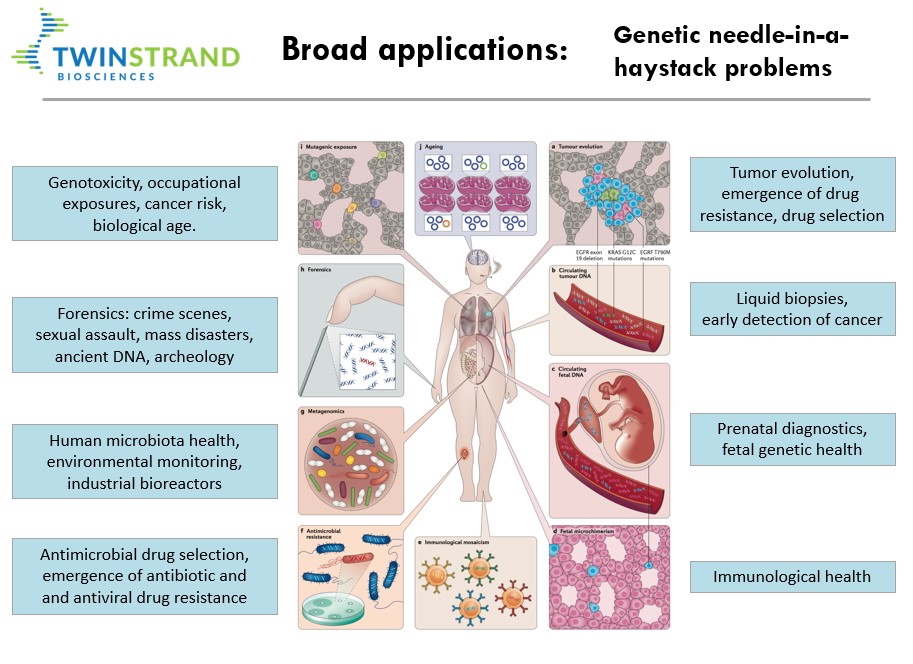
NewDownload our mobile app for a faster and better experience.
Comments
0U
Join the discussion
Sign in to leave a comment