8 Ways to Elevate Your Brand as a Creator or Entrepreneur (& Close the Pay Gap)
While many are still skeptical, the global creator economy is expected to reach $1.18 trillion USD by 2032. And for minority creators and entrepreneurs from underrepresented groups, this moment is especially significant.
![Free Kit: How to Build a Brand [Download Now]](https://no-cache.hubspot.com/cta/default/53/814dd420-0d49-40e0-b59c-f01066e186c1.png)
The digital age has created endless avenues for self-expression, connection, and community among niche audiences. It’s brought to light pain points and business opportunities that previously flew under the radar, and no one is better equipped to help fill them than creators from those very groups.
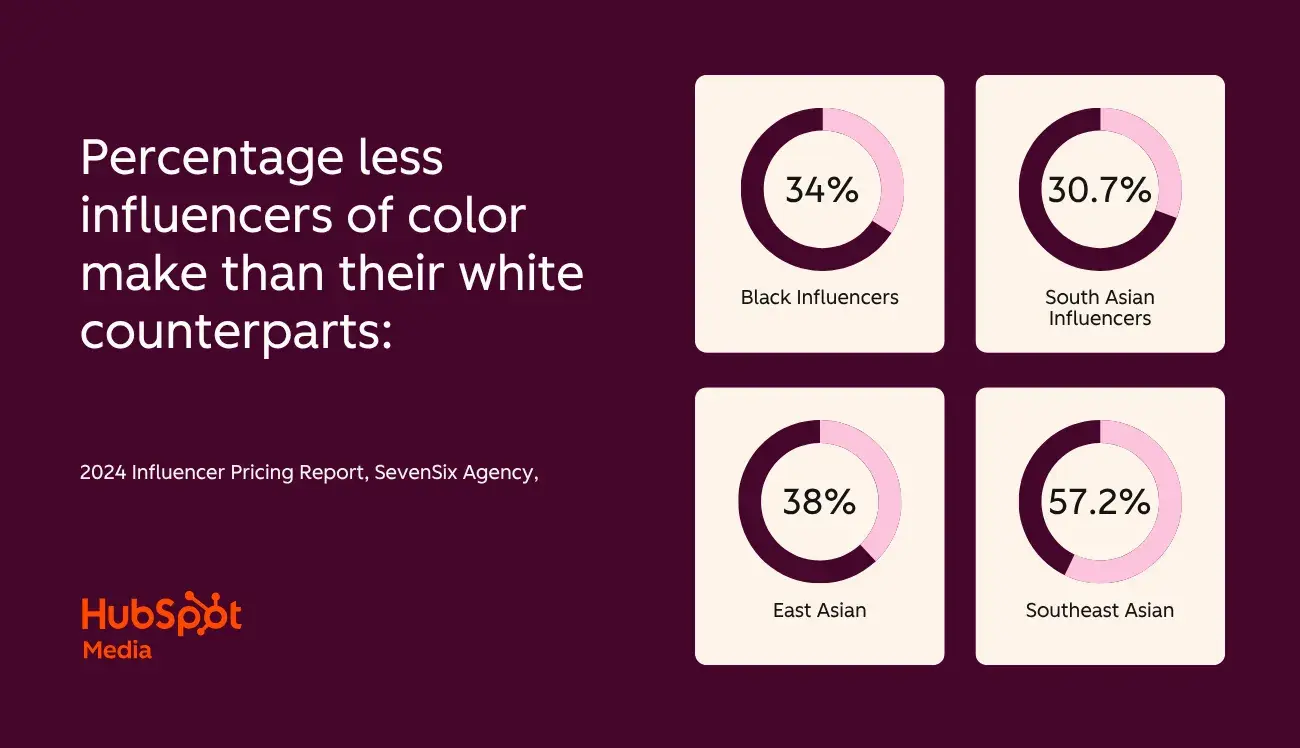
Becoming a successful content creator is hard for anyone, but it’s particularly difficult for minority creators, who studies confirm make on average 50% less than their white counterparts.
Branding can help close this gap.
Today, the question isn't whether you belong in the space — you absolutely do. Instead, it's how you build a brand with real authority, a loyal audience, and a business that'll grow in a tough environment. In this article, we’ll share eight actionable tips to help you do just that.
Table of Contents
- The State of the Creator Economy
- How to Elevate Your Brand as a Minority Creator
- FAQs about elevating your brand as a minority creator
- Build the brand you want to see in the world
The State of the Creator Economy
The creator economy is growing fast, no doubt. HubSpot research found 89% of companies worked with a content creator or influencer in 2025, and 77% plan to invest more in influencer marketing this year.
However, despite the prominence, about 96% of creators still earn less than $100K annually. That’s a big gap between those who make a sustainable income and those who don’t.
Forbes contributor Jason Davis argues that this is because the industry has matured and brands are consolidating their investments to “proven” influencers. In other words, wealth is concentrated among fewer creators.
“Early stages reward experimentation and specialization,” he explains. “When search engines emerged, Archie and Ask Jeeves held the traffic, [but] Google took market share and was rewarded through integration, scale, and disciplined execution. The creator economy has reached that same point.”
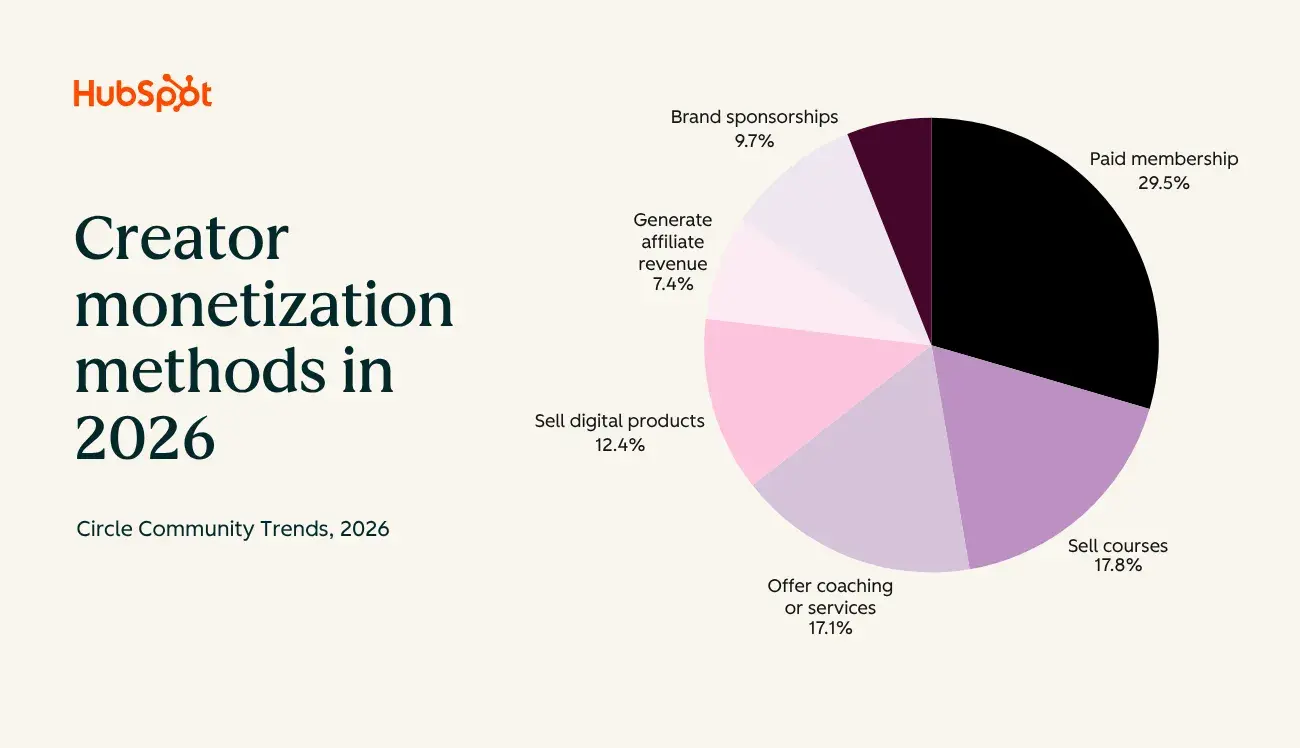
There are now more than 200 million creators worldwide, and the highest earners aren't just posting more; they're diversifying across 5 or more revenue streams. In fact, according to Circle, only 22% of creators report earning from affiliate revenue, while only 18% earning from sponsorships.
- 88% monetize through paid memberships
- 53% sell courses
- 51% offer coaching or services
- 37% sell digital products
- 22% generate affiliate revenue
- 18% earn from sponsorships
Below are some strategies you can use to grow your brand (and overcome pay gaps) with all of this in mind.
How to Elevate Your Brand as a Minority Creator
1. Lead with your unique authority
Niche finds your audience and identity can open doors, but authority is what keeps them open and scales your brand beyond novelty.
Many marginalized entrepreneurs are encouraged (and even expected) to center their personal story or background, but without clear expertise in their niche, that attention rarely converts into sustained opportunity. Plus, you don’t want your identity to turn into a “gimmick.”
When faced with potential bias, your brand has to communicate value quickly and unmistakably. And the more specific your niche or focus, the more recognizable and in-demand you become.
The key is to go narrow enough that no one can replicate what you bring to the table. Make brands and audiences feel like they don’t just want to work with you — they have to.
Use your platforms to showcase what you do best:
- The problems you’ve solved
- The outcomes you’ve driven (include data, proof points, case studies, testimonials, before and afters)
- The tools you use to get there
- The lessons you learned
Speak on the topics where you have unique experience and genuine passion.
Now, that doesn’t mean you have to ignore or water down your identity, of course. Your identity is part of what makes you you, but treat it as context that deepens your perspective and makes your insight distinct, rather than the foundation of your value. Over time, this shift moves your brand from being interesting to being indispensable.
Goldie Chan has done an amazing job of this.
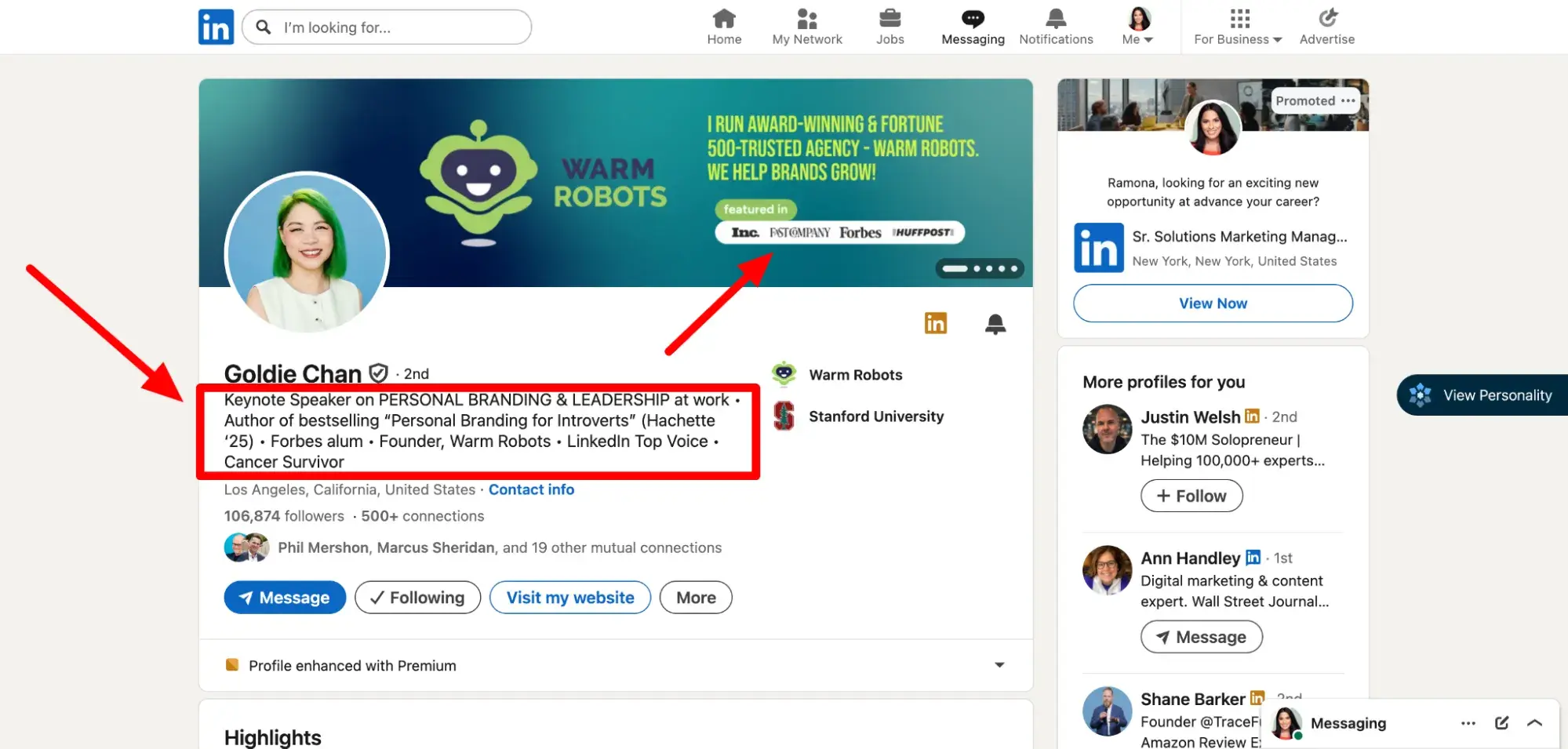
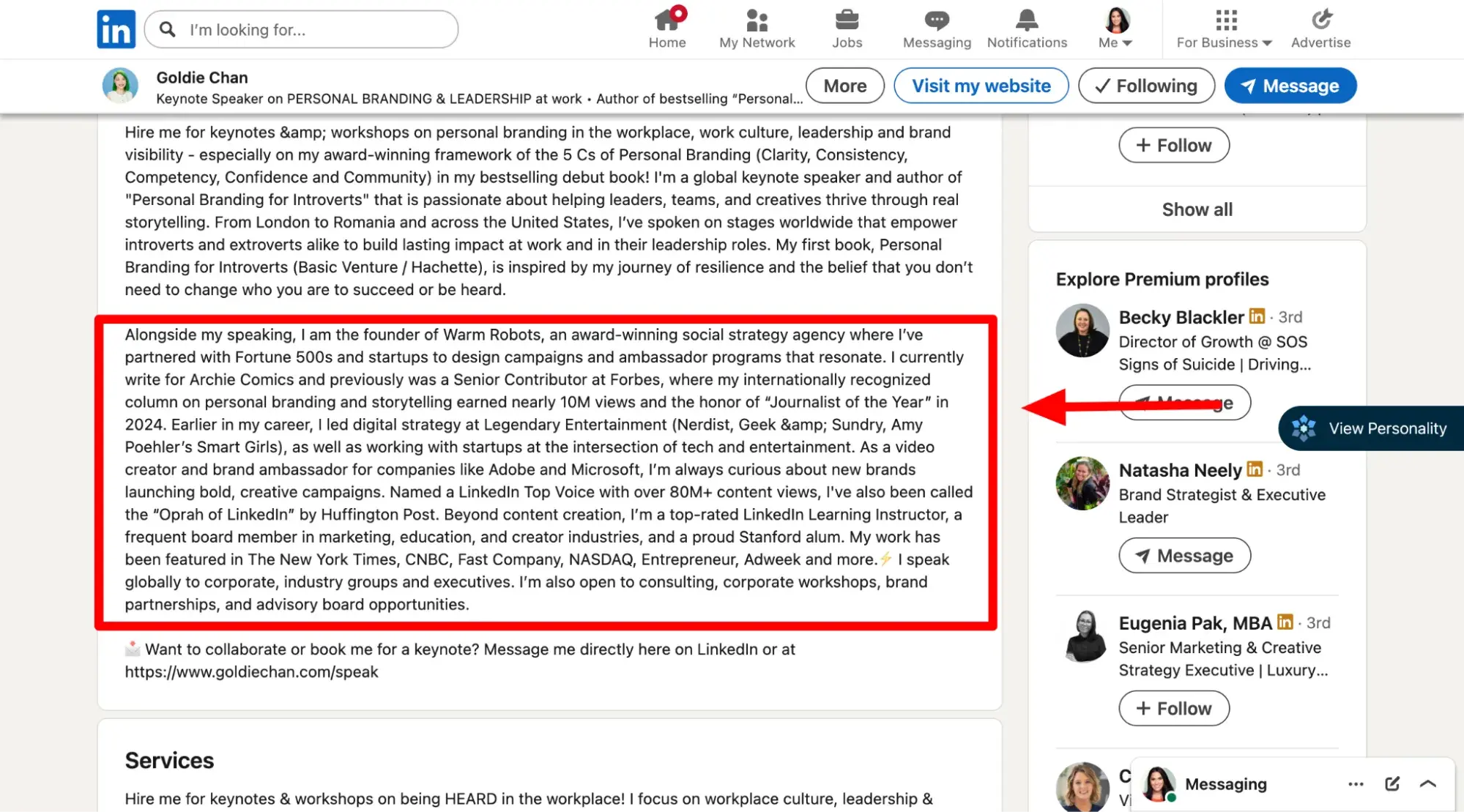
An author, speaker, and LinkedIn Top Voice on personal branding, Chan leaves no stone unturned when it comes to sharing what got her there. Her profile headline and bio detail her qualifications and achievements, including founding an agency, working with Fortune 500 companies, and leading social strategy for both startups and organizations as big as Nerdist.
2. Find your bold point of view
There’s an old saying that if two people always agree, one of them is not needed. To a degree, the same rings true in the creator economy. If you’re just saying or sharing the same things as everyone else, why would anyone choose you over others?
Give them what they can’t get anywhere else.
Find your sharp point of view; your bold opinion, beliefs, or strategy that challenges norms and reframes how people think about a relatable problem, hot topic, or industry. That’s what gets you cited, quoted, invited, and remembered.
For example, instead of just sharing what you’ve experienced, articulate what most people are getting wrong and what you’ve done differently instead.
The difference looks like this:
- ❌ “My journey as a ___”
- ✅ “Why most companies fail at ___ — and what actually works”
But don’t think you have to go ruffling feathers just for the sake of standing out.
My friend and Marketing & Brand Speaker, Chirag Nijjer, explains, “People hear ‘bold point of view’ and assume it needs to be complex or contrarian. It doesn't. The most powerful point of view is simply the lens you apply to everything you do.”
Nijjer’s is a question that came from studying how brands survive massive periods of change — “What is the story you wish to tell?”
“Starbucks nearly lost itself in 2008 chasing speed and competitors until Howard Schultz returned and redirected investment into things like ergonomic seating and smaller machines,” Nijjer continues.
View this post on InstagramA post shared by Chirag Speaks | Brand Marketing Historian & Keynote (@chiragspeaks)
“Choices like that only made sense going back to their narrative and ‘story’ of being a third place. That one question is the POV I run every keynote, every video, and every consulting engagement from.”
He also argues that the same discipline applies to any creator building something that needs to last. What story do you want to tell with your personal brand?
3. Build & own your distribution
Research once found that 42% of YouTube creators would lose more than $50,000 annually if their account access were revoked. In other words, YouTube wields significant power over its audience and its earning potential.
That’s why owned distribution is one of the most important assets you can build. The most resilient brands don't depend solely on social platforms or third-party visibility, which leaves them vulnerable to algorithm changes, shifting priorities, or exclusion from key networks.
Rather, they build direct relationships with their audience so they can maintain control over their cadence, messaging, pricing, and more.
How can you do this?
- Start collecting emails early. (HubSpot Marketing Hub can help you here.)
- Use social media as a discovery layer — not your foundation. Backup your content on a website or app you control.
- Prioritize platforms where your audience actively engages, not just scrolls. Have conversations. Listen. Ask and answer questions.
- Optimize for shareability among peers, not virality among strangers.
When you own your distribution, you reduce dependence on gatekeepers and create a more stable, scalable path to growth.
4. Productize/monetize your knowledge early
Part of successful content marketing is sharing valuable information, but that doesn’t mean you should give it all away for free.
Many creators find themselves sharing insights, advice, or expertise without capturing the full value of that knowledge for far too long, and it can lead to burnout and undercompensation. Productizing that knowledge early on lets you scale your impact and income without necessarily increasing your workload. Productization can take many forms.
Some of the most popular and effective are:
- Online courses (Self-hosted or on Udemy, Skillshare, Teachable)
- Workshops
- Templates
- Books (digital or print)
- Content Subscriptions/Memberships (i.e., Patreon, Substack, or HubSpot Content Hub)
- Newsletters
For a real-world example, look at creator Bianca Byers, aka Bianca Bee. Byers is a seasoned media professional who has worked for E!, The Oprah Winfrey Network, TMZ, VH1, FOX networks, and Paramount Pictures, among others. She has turned her expertise into three books, a YouTube talk show, a cosmetic line, and her own brand and media collaborations.
View this post on Instagram
She explains, “Working in the television industry for over a decade taught me to never rely on a single stream of income. Rather, I’m deliberate about growing my personal brand alongside my day job, creating additional revenue from channels I own and turning my voice into tangible products that genuinely serve my audience.”
My advice to creators is to monetize your knowledge early in a way that feels aligned, and not to be afraid to build multiple streams under one brand umbrella. When your vision is clear, your audience will follow. You do not have to choose between a career and entrepreneurship. You can do both, and one can elevate the other.”
Nijjer agrees. He shared, “Most creators wait for some imaginary threshold before they charge for what they know, but at the same time, they're training their market to expect their expertise for free. I packaged the same brand research from my videos into a keynote years before anyone told me I was ‘ready’.”
That keynote opened doors for Nijjer to platforms like Adobe, Shopify, and the History Channel.
But what should you productize exactly? If people keep asking you the same question, the answer can likely be a product.
“The knowledge I share in my keynote is the same knowledge behind my Instagram content and my TV commentary, echoes Nijjer.
“What changed was the packaging and method of sharing the information. Some people want to learn via social media, and that’s low effort, so it's free. Others want personal guidance and tons of resources, which cost money. So, they become paid resources. Start putting your expertise into containers people can buy early— like a talk, a workshop, or a paid framework. That packaging is what teaches the market to value you as not just an expert but a product.”
Overall, you want to make it easy for people to pay you without asking how and charge for the value you truly bring.
5. Be selective about visibility
Momentum is built by saying yes to the right things, but not everything. Before any panel, partnership, or feature opportunity, ask yourself:
- Does this grow my authority or just my awareness?
- Do I control my narrative in this context?
- Will it lead to tangible outcomes, such as audience growth, partnerships, or revenue?
- Is this relevant or valuable to my existing audience?
Opportunities that position you well, in rooms where you want to be known, are worth pursuing. The ones that don‘t compound? It’s ok to pass, regardless of how they’re packaged.
Ariel Gonzalez, a HubSpot Content Marketing Manager and “Magical Marketer,” agrees. “It’s tempting to say yes to every opportunity that comes your way, especially when you're early in your brand-building journey,” she shared with me.
“I began investing in my visibility on LinkedIn shortly after being laid off. Since then, I’ve been creating content, elevating my brand, and participating in several speaking engagements, including The Latino AI Summit — but not every opportunity will be the right one for you. Gaining visibility for visibility's sake puts you in a reactive position, leaving others to define your brand instead of you.
Get clear on what you want your brand to represent, what your goals are, and what success looks like for you, then let that clarity guide every yes and every no.”
Collaborate laterally (not just upward)
Traditional networking advice often says to build relationships with people who have more power or influence. But for many growing entrepreneurs, especially those from marginalized groups, lateral collaboration (working with peers at a similar stage) can be more accessibl
Take Your Experience to the Next Level
NewDownload our mobile app for a faster and better experience.
Comments
0Join the discussion
Sign in to leave a comment